Roskilde Domkirke. Part 2: Leaving a Legacy
Roskilde Domkirke. Part 2: Leaving a Legacy
Aside from being fascinated with soaring vaults and beautiful Sarcophagi, my curiosity about how the previous kings and queens of Denmark lived. Their deaths are either known, came as a surprise or can we define it as “fate”? One thing is certain – they left a legacy. Each of them had a royal motto (valgsprog in Danish).
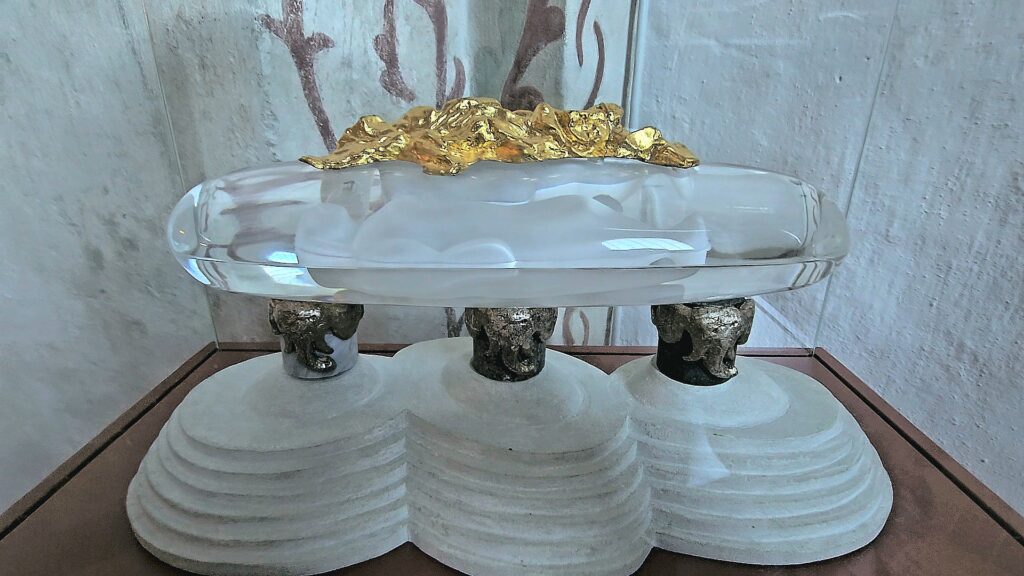
What would you do if you were given the chance to design your own sepuchral monument? You may be an artist who wishes to make a remarkable remembrance of you when you have to leave this world.
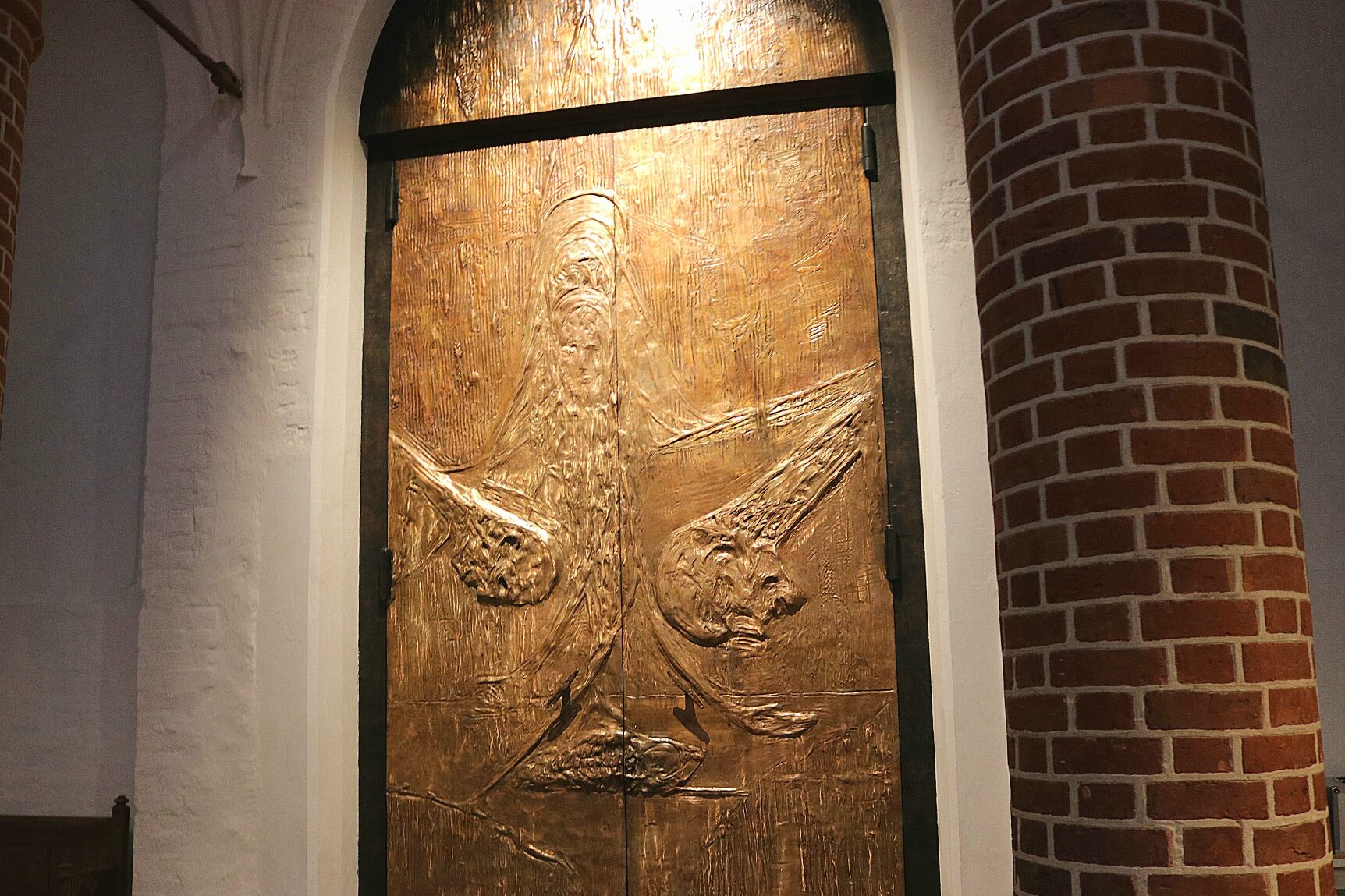
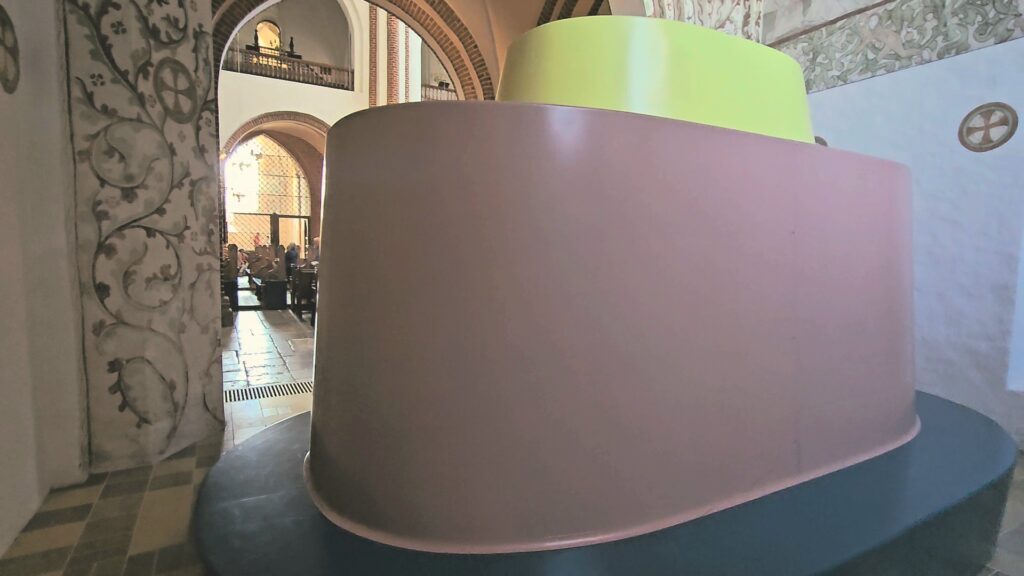
This beautiful piece of art is has been created by the artist, Bjørn Nørgaard (born 1947), in collaboration with the royal couple. It will remain covered until after the monarch is laid to rest. The current Her Majesty Queen Margrethe the 2nd has a motto “Guds hjælp, Folkets kærlighed, Danmarks styrke”. – God’s help, The People’s love, Denmark’s strength.
The monument is covered. It can be used as a bench, so one can sit and ponder at Birgitta’s chapel.
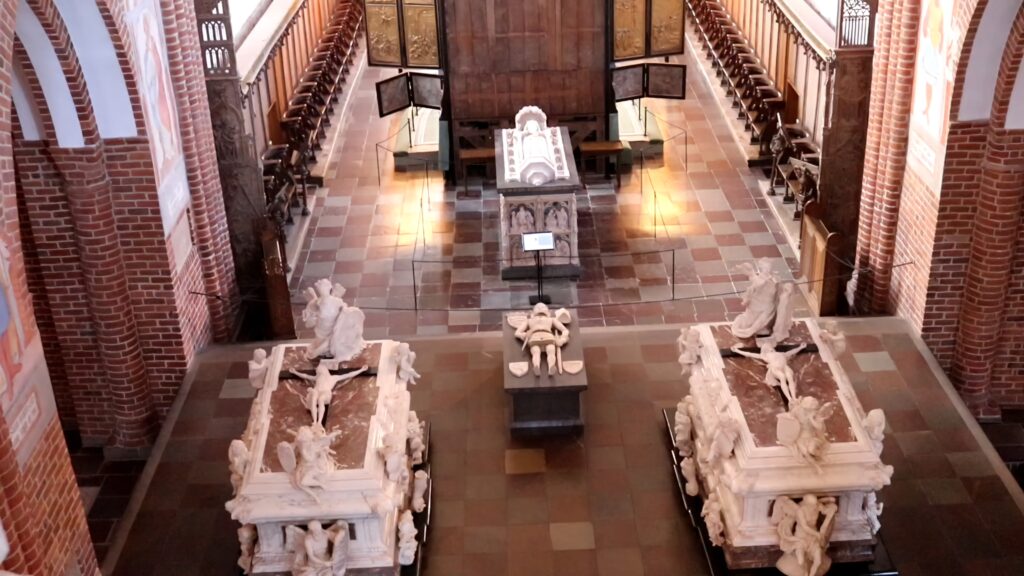
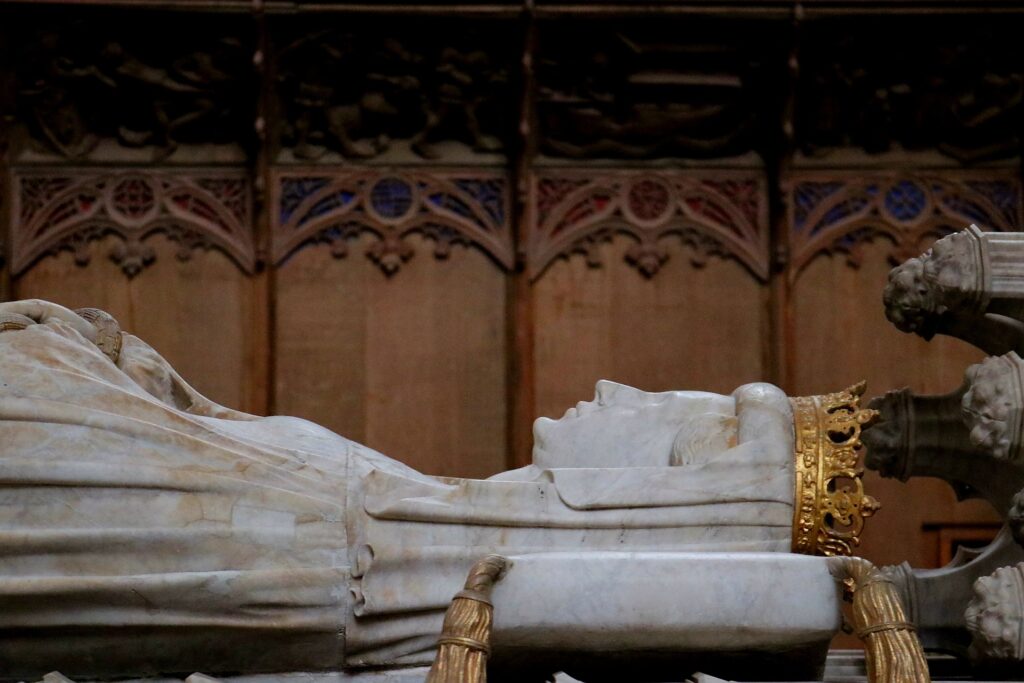
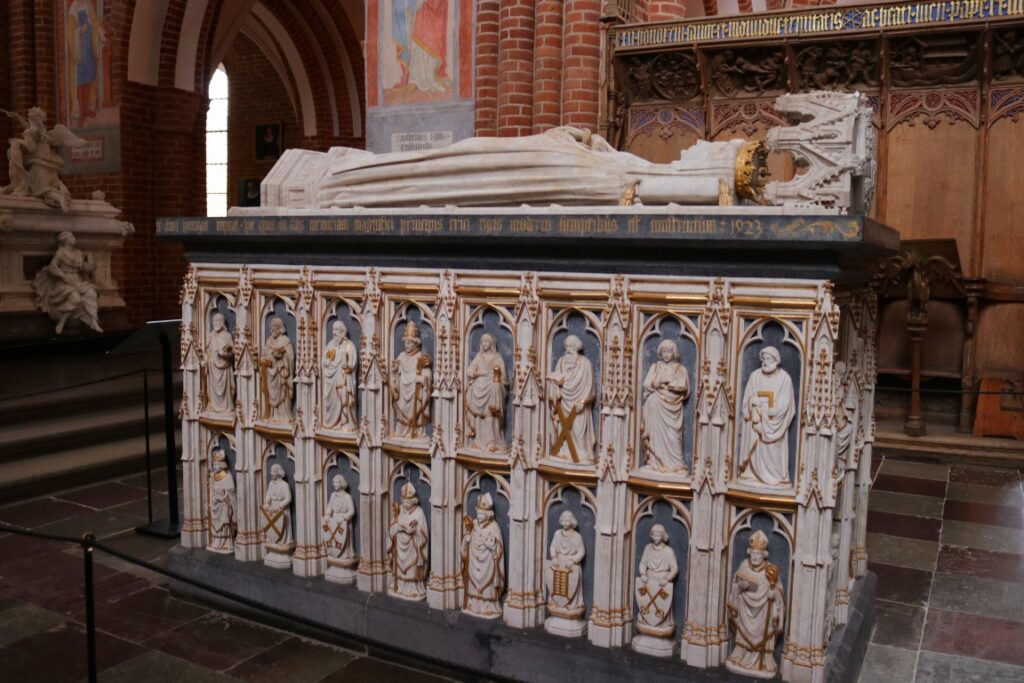
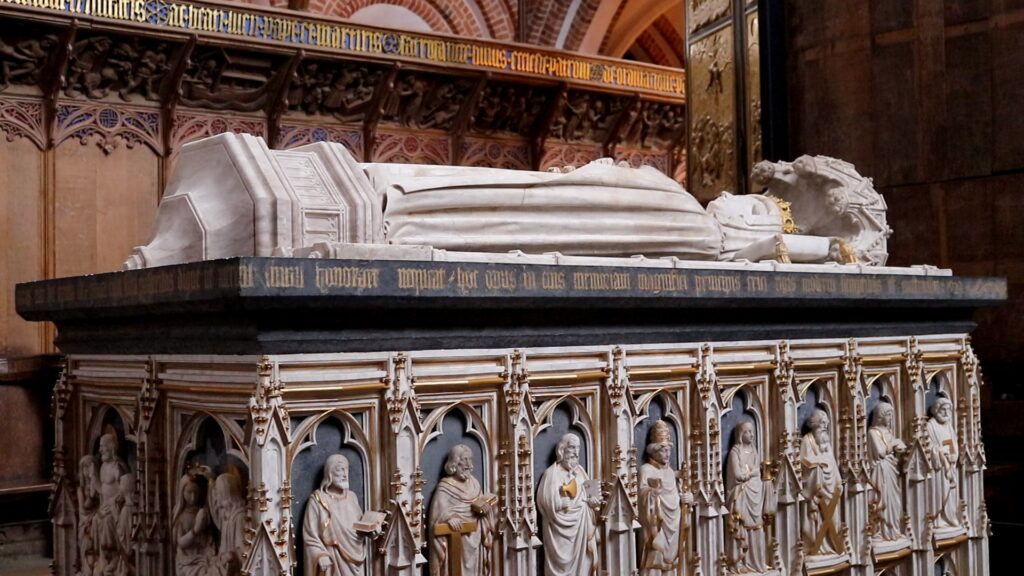
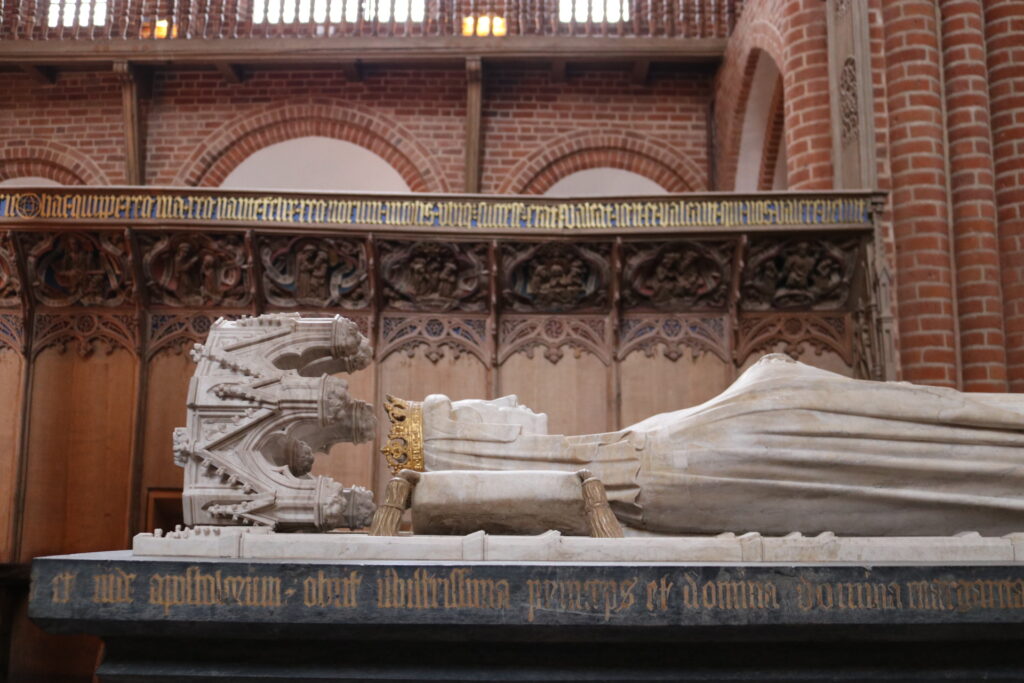
A view from the top where the Sarcophagi1 of Margrete 1., Duke Christopher of Lolland Margrete 1. older brother), Christian 5. and Frederik 4. can be seen.
Christian 5. He was fond of riding and hunting. He ruled after the reformation. His humbleness made the people loved him.
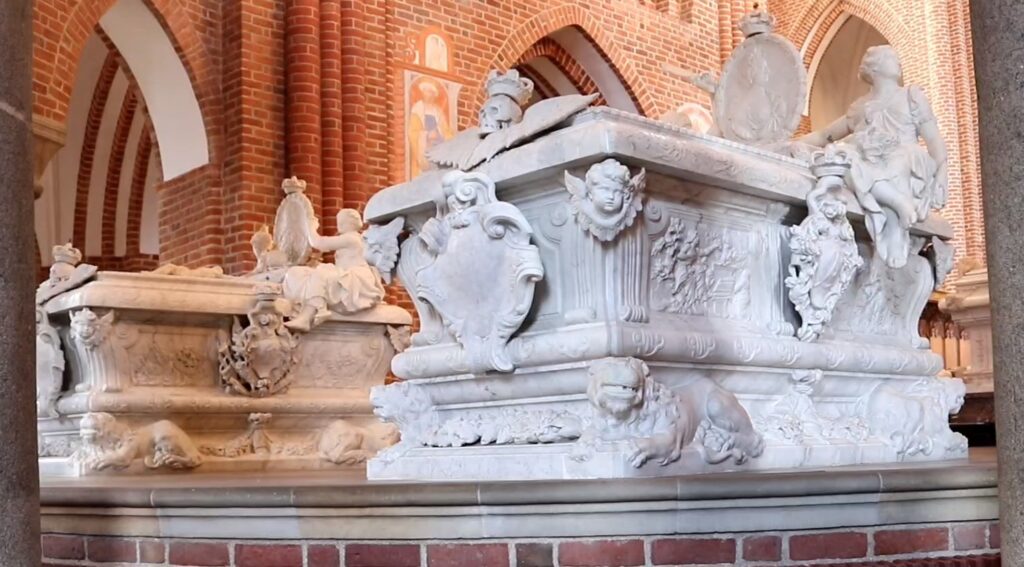
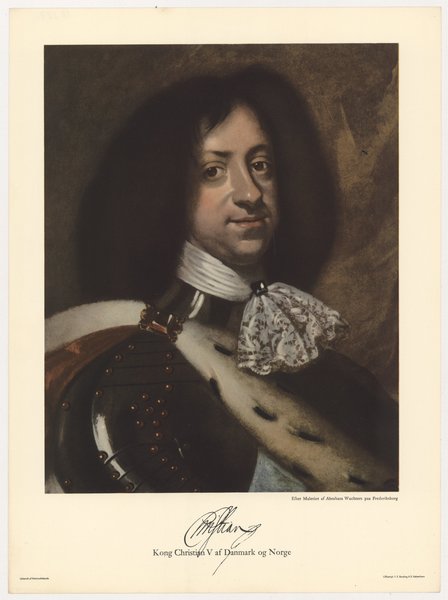
The two women figures on this sarcophagus named Pietas (piety) and Justitia (justice) characterized his journey, making him one of the most popular kings in the autocracy’s line of kings.
Photo credits: Danmarks Historien
Harald’s Stone2. It tells a story when the country was transitioning from a tribal society to a Christian Kingdom. Harald writes that he is the king of the land and made the Danes Christian. Denmark’s birth certificate
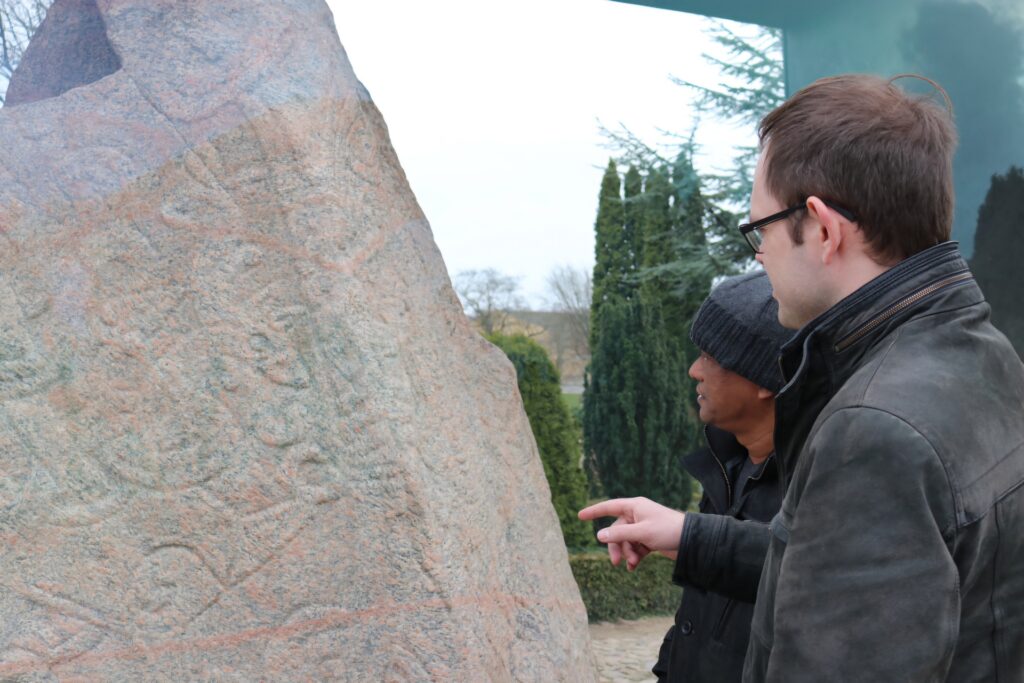
Dating back to the 1080’s, when the church was first built, right even before they discovered the bricks in the 1100’s, there was a myth that King Harald Blåtands (Harald Bluetooths)3 grave was buried in the church in his death about 988, though there are no other sources or archaeological evidence to support this claim.
Kultur ministeriet
He was known as the ancestor of the Royal family. He was the king who united the kingdom and the Christian Danes.
This is considered the 2nd phase, approximately 960-990.
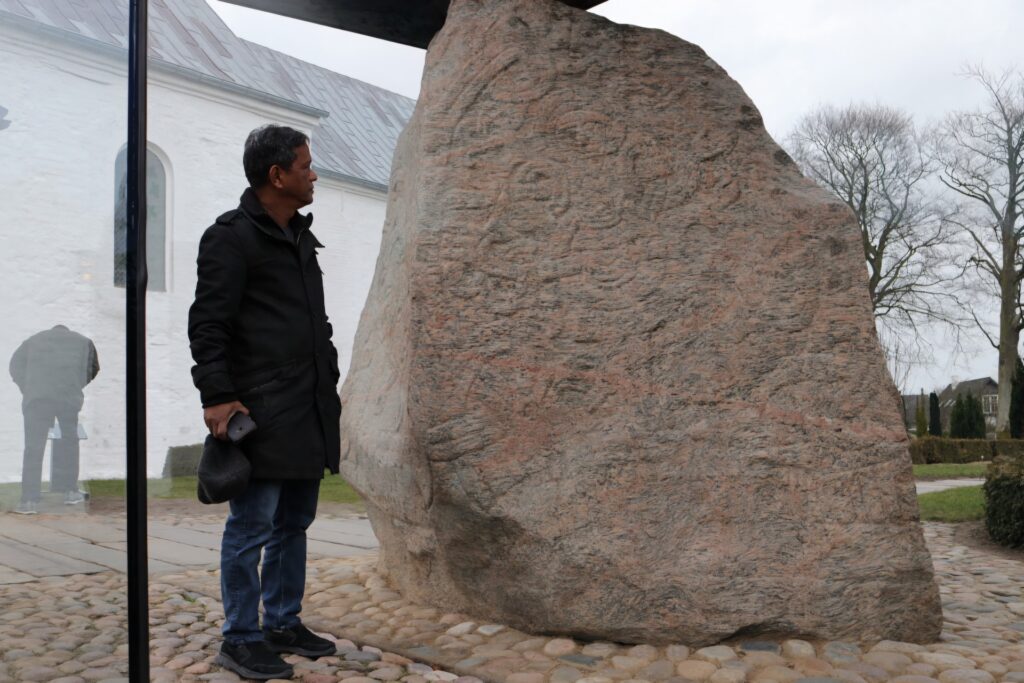
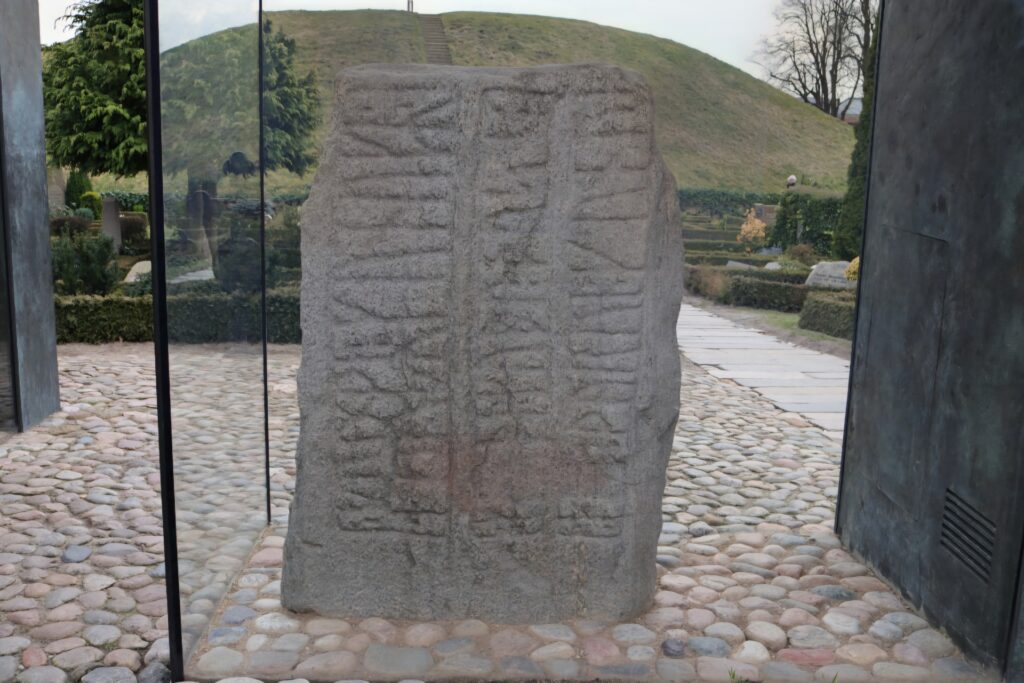
Denmark’s name appears for the first time. The stone was placed in about year 950 by “Gorm den Gamle” Gorm the Old in memory of his wife Thyra.
Every details inside the church reveals the belief and traditions associated with being either a christian or the other4.
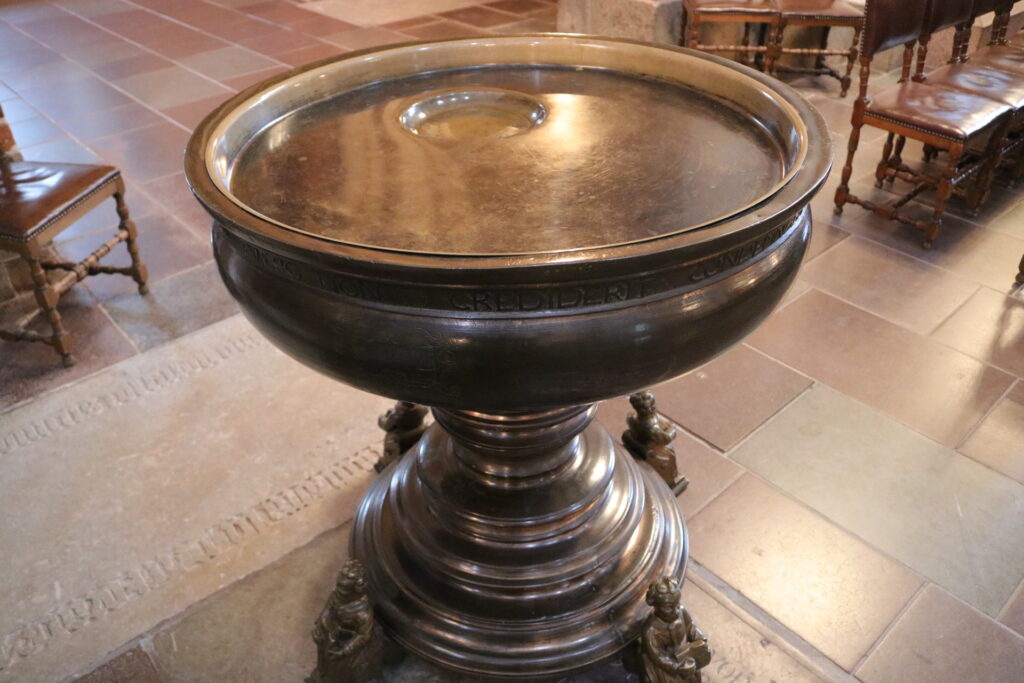
The Baptismal Font is from 1602 and it replaced a medieval font.