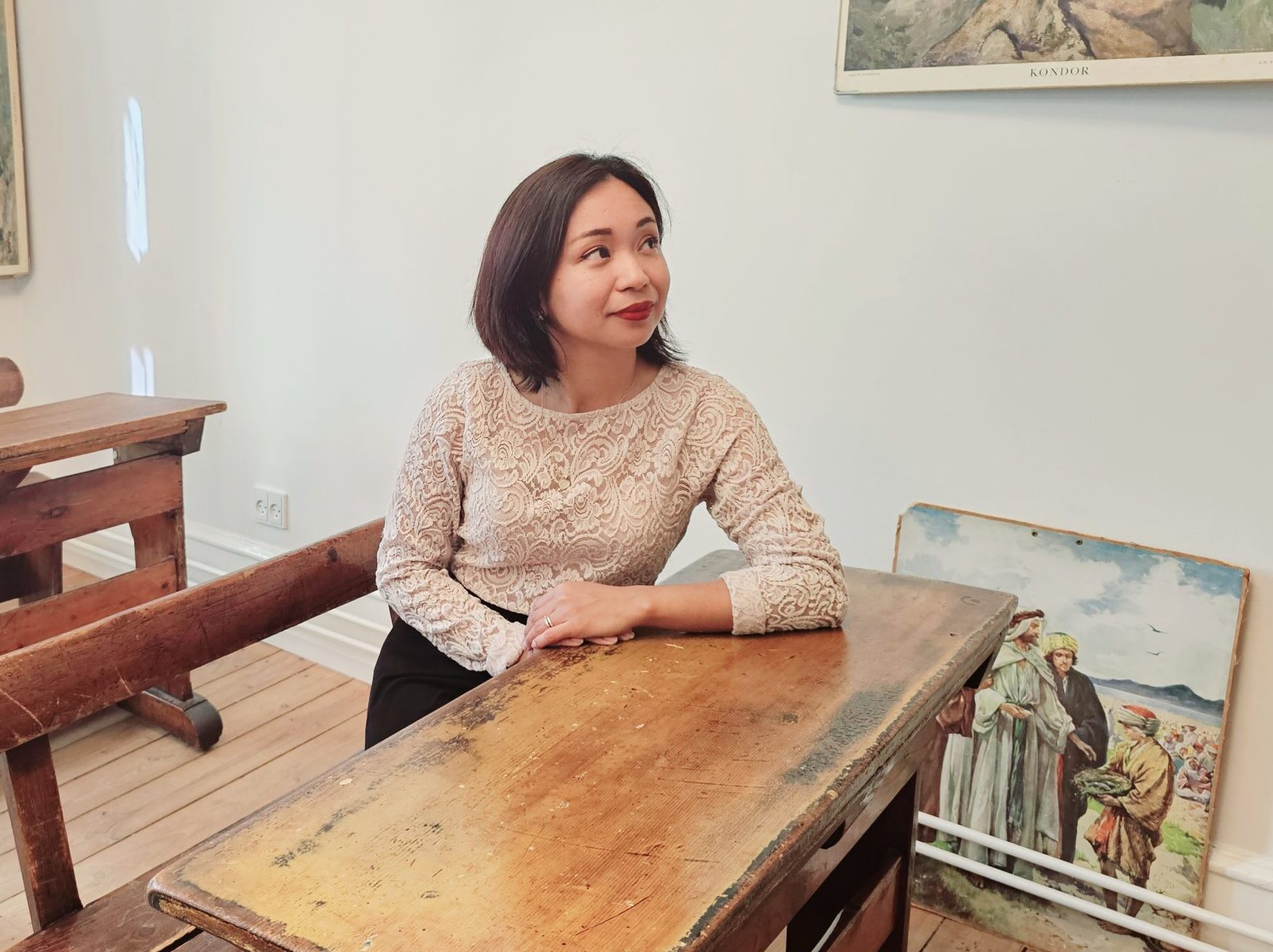
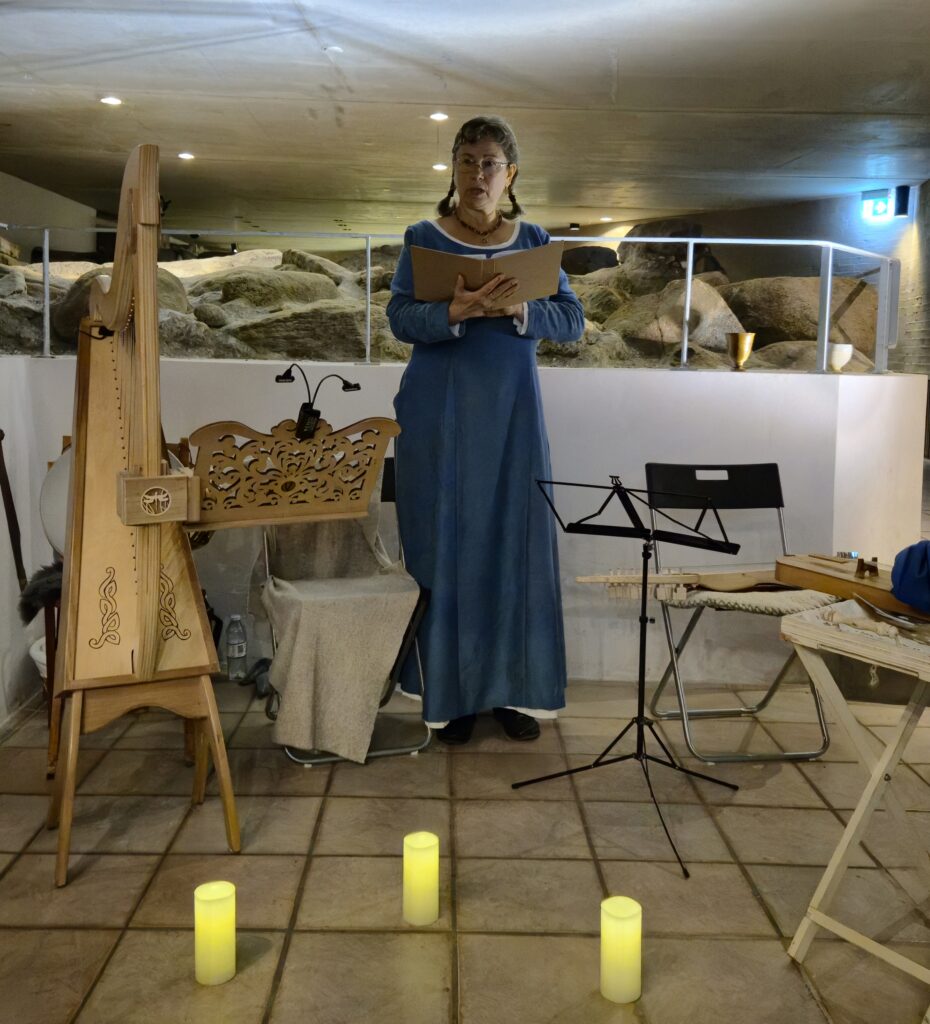
Maria’s musical journey began early, with the gentle introduction to the piano in her childhood. This foundational experience provided her with a deep understanding of melody and harmony. As she entered her teenage years, her passion broadened, leading her to pick up the guitar, an instrument that offered a different dimension of self-expression and rhythm. However, her musical curiosity did not stop there. As her professional career unfolded and she worked through various musical projects and performances, she became captivated by the harp’s ethereal sound and historical resonance.
Video to be published soon.
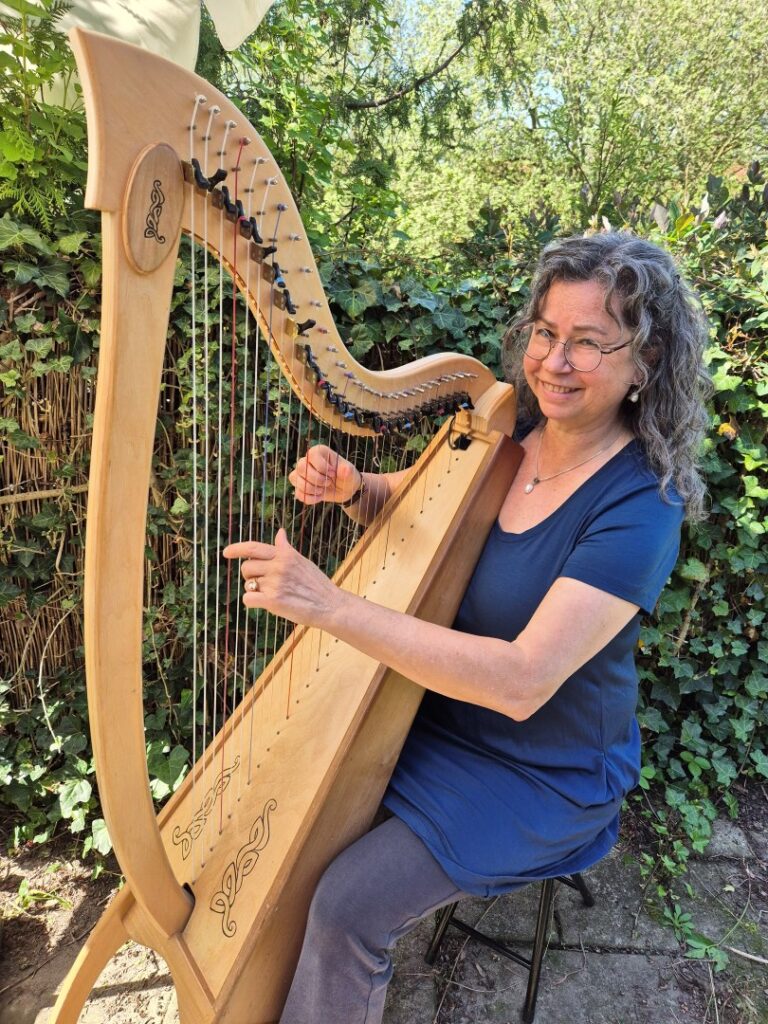
The instrument holds personal significance, as Maria bought the harp from a good friend, Sally Sehlin. This specialized instrument tailors it to Maria’s unique needs and playing style.
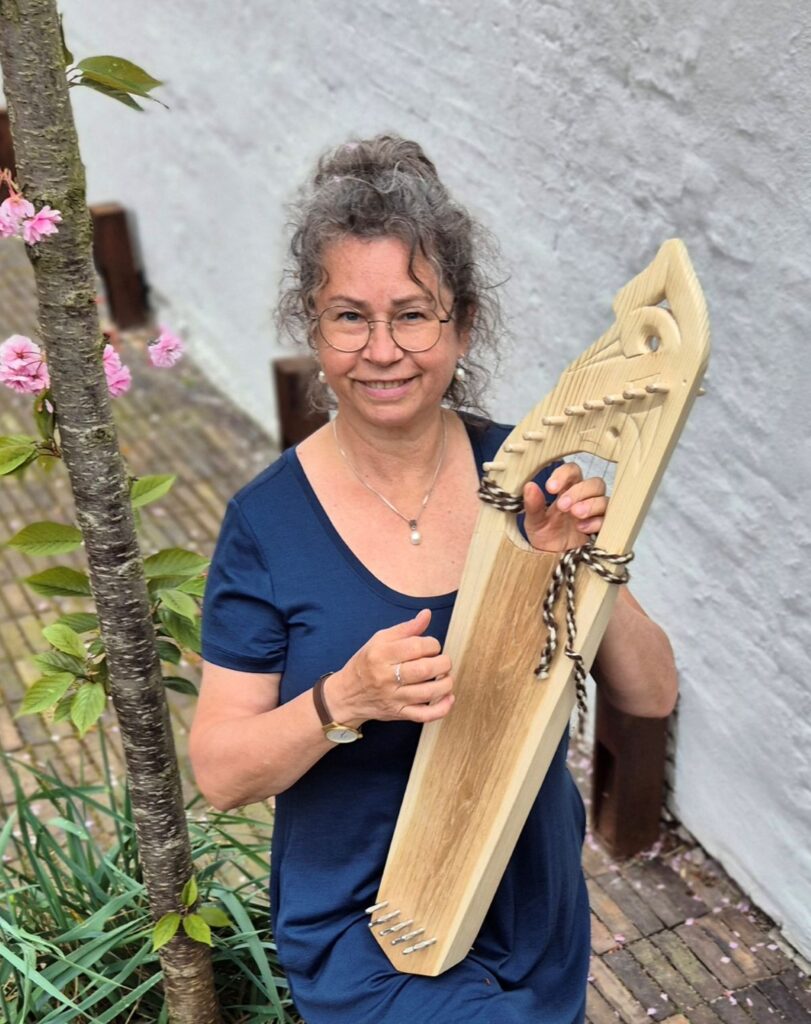
Maria is actively pursuing her musical education. She is becoming a fully certified and skilled organist. This ongoing training highlights her dedication to her role and her contribution to the musical traditions of the Danish Church.
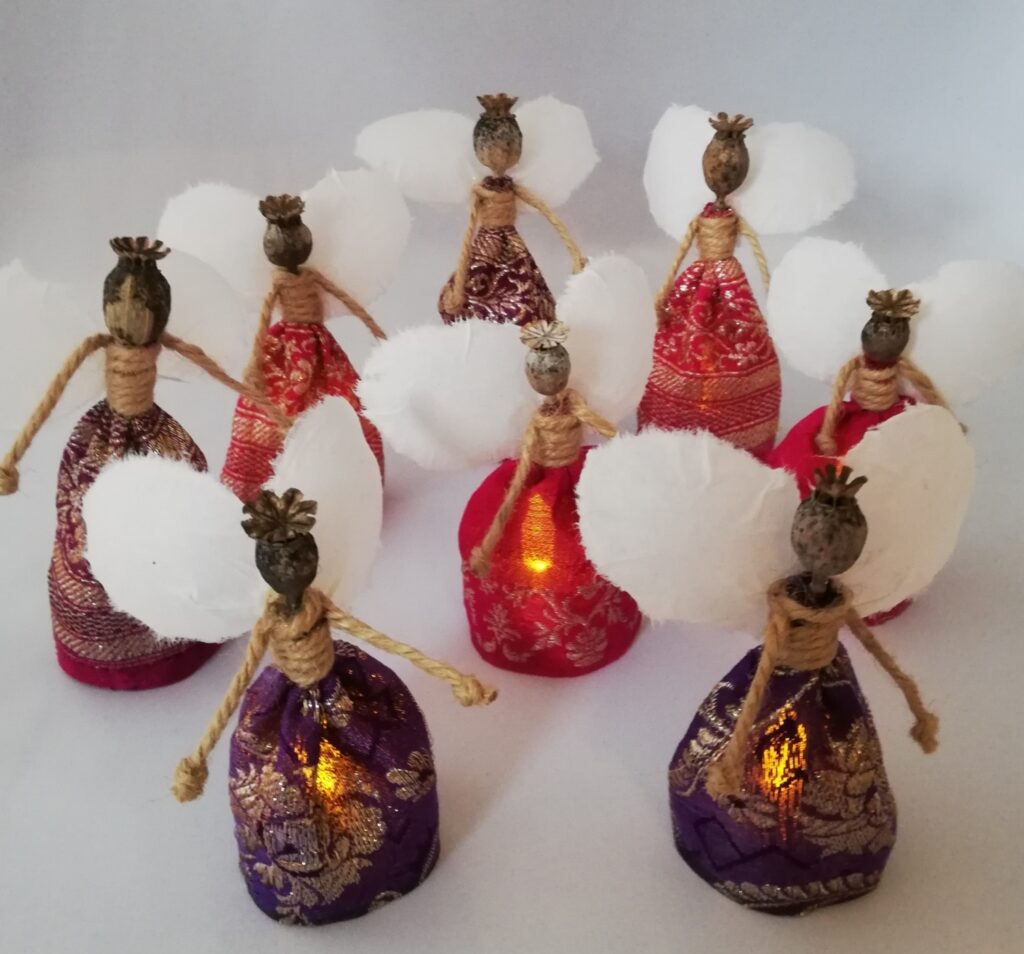
Sari Angels by Maria
For over 10 years she has been working with older European music, both vocally and instrumentally. She plays several different string instruments and percussion.
In 2012 she helped found the medieval group ”Norna (Nor/na)”, with which she has participated in several medieval festivals and music services. She is currently a member of the duo ”Chordae Mariae” (Maria’s strings).
Maria also plays the harp improvisationally for meditation services, at hospices and at nursing homes.
Learn more. The Harp: A brief overview
Sources: Gemini, Dansk Konversations Leksikon
The harp is a stringed musical instrument that has the strings running at an angle to the soundboard, unlike a guitar or violin where the strings are parallel. It is characterized by its triangular or arched frame, which supports the strings. Modern orchestral and concert harps typically have a large, roughly triangular frame with a soundbox, a neck, and a column, and often incorporate pedals (on a pedal harp) or levers (on a lever harp) to change the pitch of the strings.
Historical Origin
The harp is one of the oldest musical instruments, with its origins tracing back to ancient times.
Modern Forms: The framework of the modern, European-style harp, including the characteristic triangular shape and the development of column and neck structures, evolved significantly in the medieval period and Renaissance. The development of mechanisms for changing pitch (hooks, levers, and eventually, the pedal system) occurred primarily between the 17th and 19th centuries, leading to the sophisticated concert pedal harp we know today.
Earliest Evidence: The earliest known depictions of instruments strongly resembling modern harps date to as early as 3000 BCE in ancient Egypt (specifically, the pre-dynastic period and the Old Kingdom) and in Mesopotamia (modern-day Iraq). These early instruments were typically arch or bow harps, structurally similar to a hunting bow with a soundbox attached.
Global Spread: Harps later developed in various forms across many different cultures, including ancient Greece, Rome, Persia, India, and China.
Modern Forms: The framework of the modern, European-style harp, including the characteristic triangular shape and the development of column and neck structures, evolved significantly in the medieval period and Renaissance. The development of mechanisms for changing pitch (hooks, levers, and eventually, the pedal system) occurred primarily between the 17th and 19th centuries, leading to the sophisticated concert pedal harp we know today.
Maria Franzén, a native of Sweden, has built a vibrant life in Denmark since relocating here in 1997. Her professional endeavors are deeply rooted in the Danish ecclesiastical and musical community. She is currently working both as a singer and an organist at “Den Danske Folkekirke,” the National Church of Denmark.
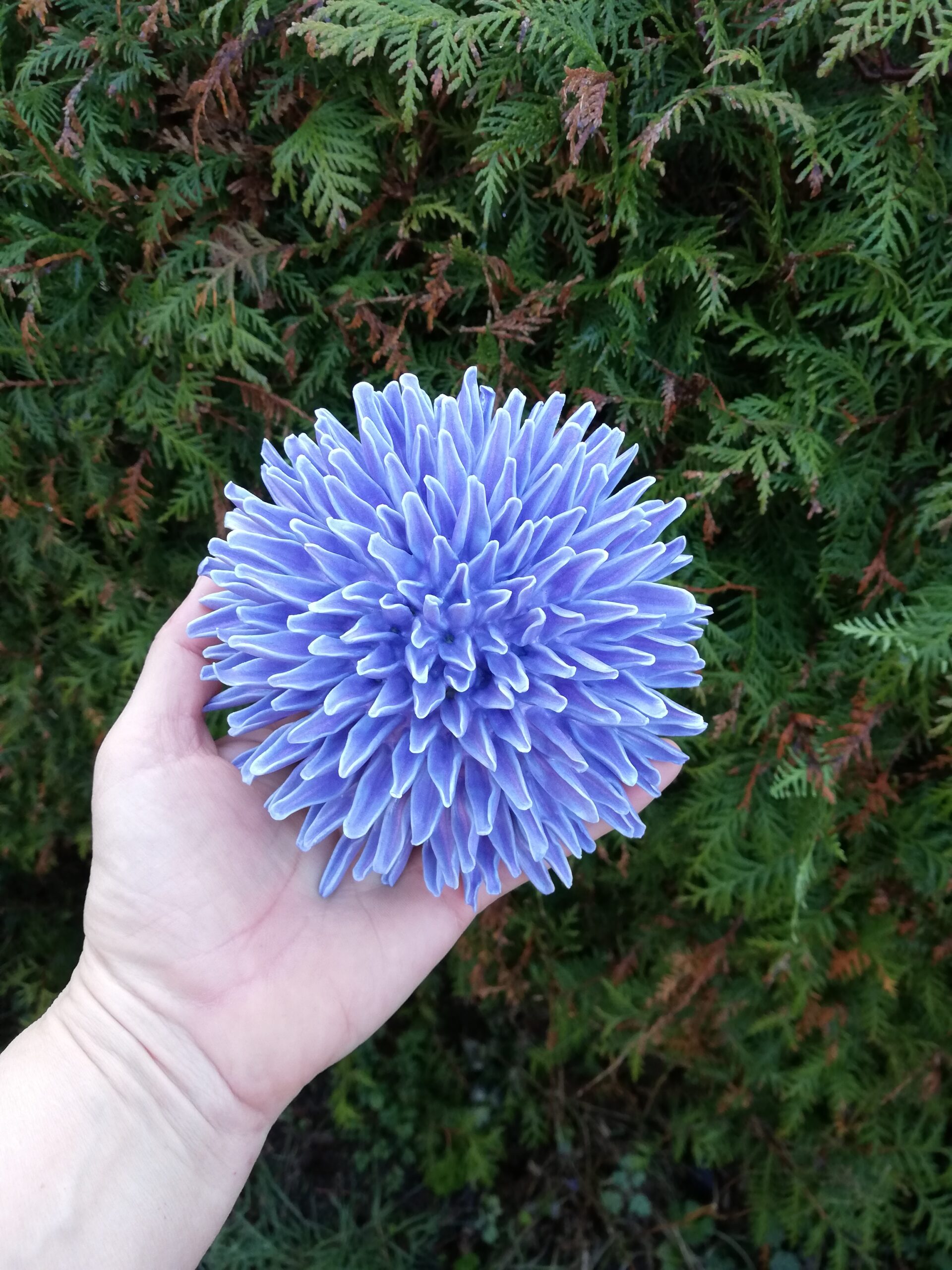
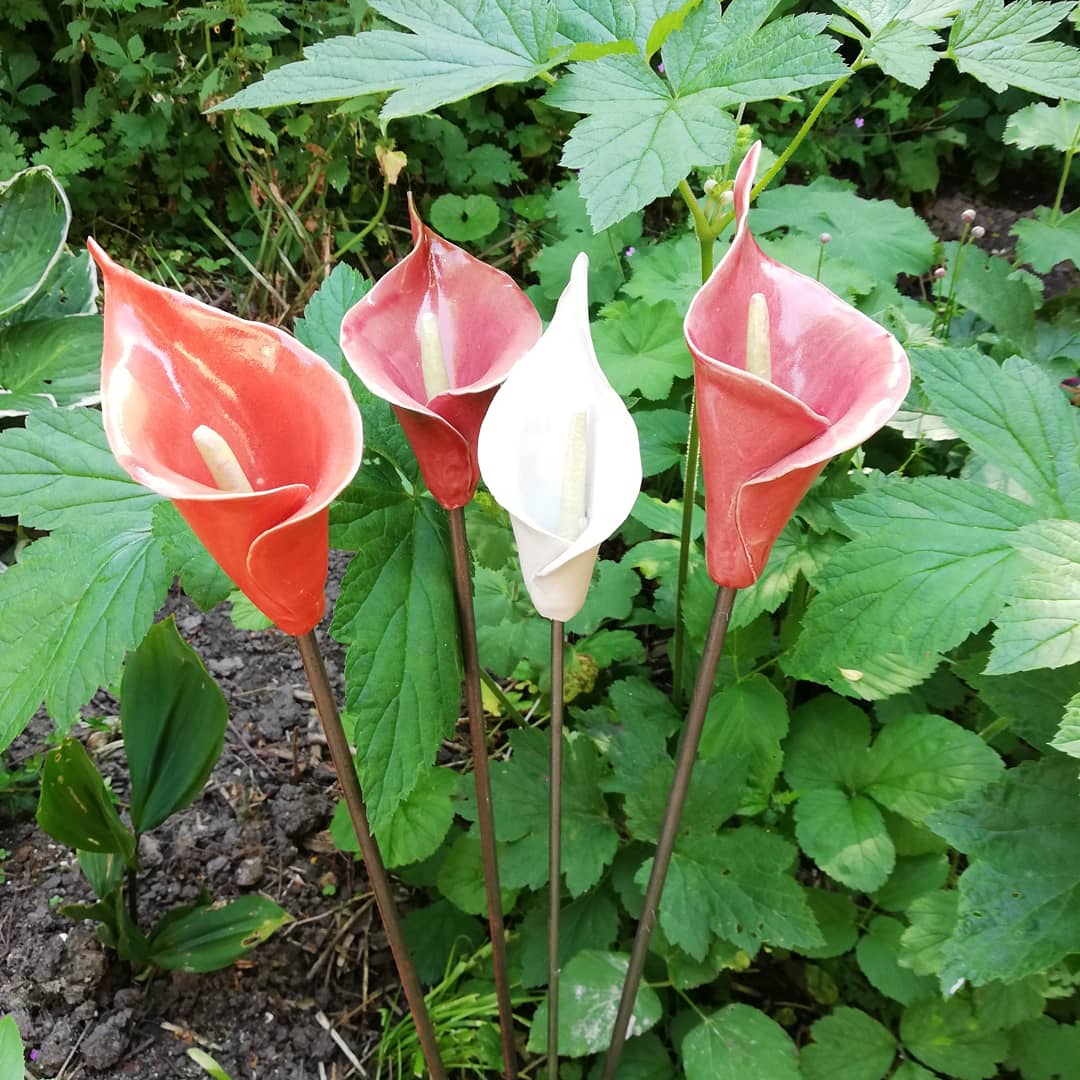
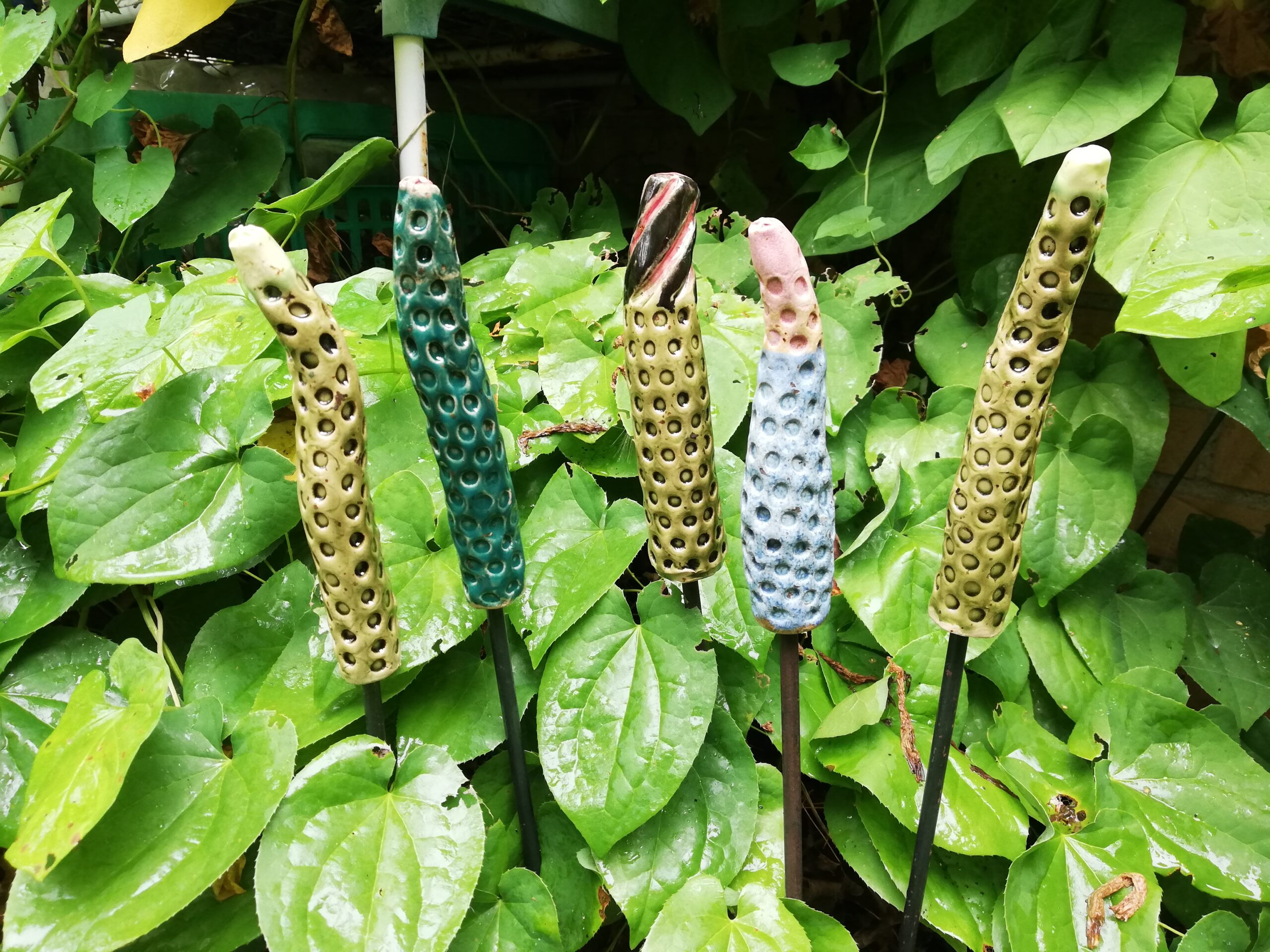
Ceramic figures are small sculptures or decorative objects made from clay that has been shaped and then hardened by firing in a kiln (a very hot oven used for pottery). -Wikipedia and AI
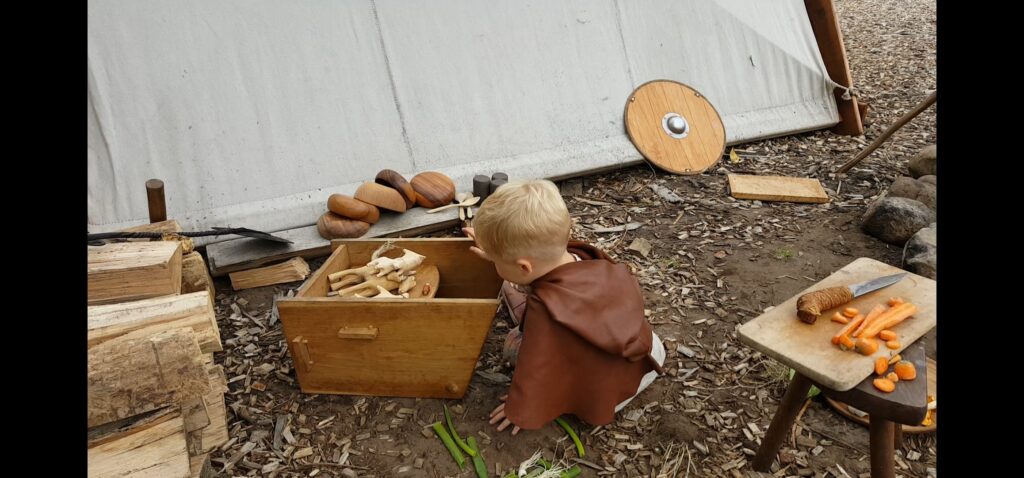
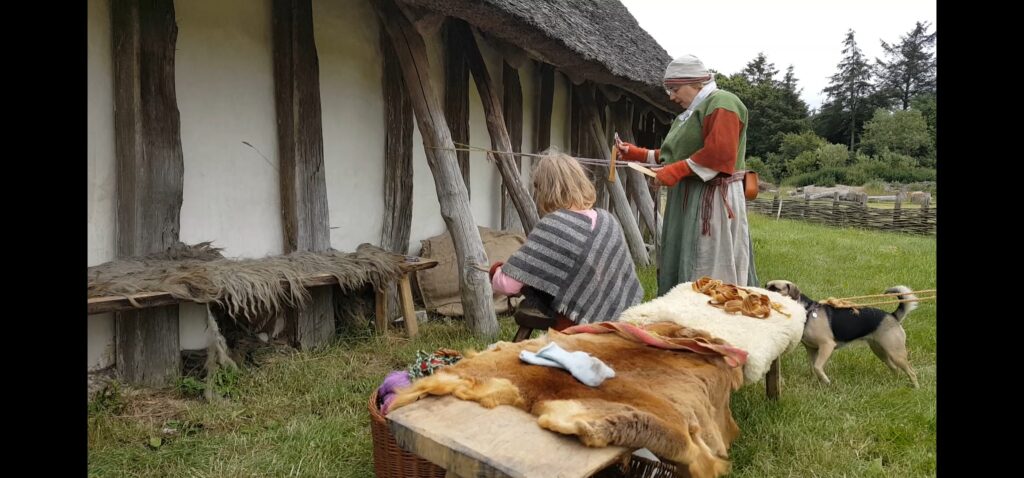
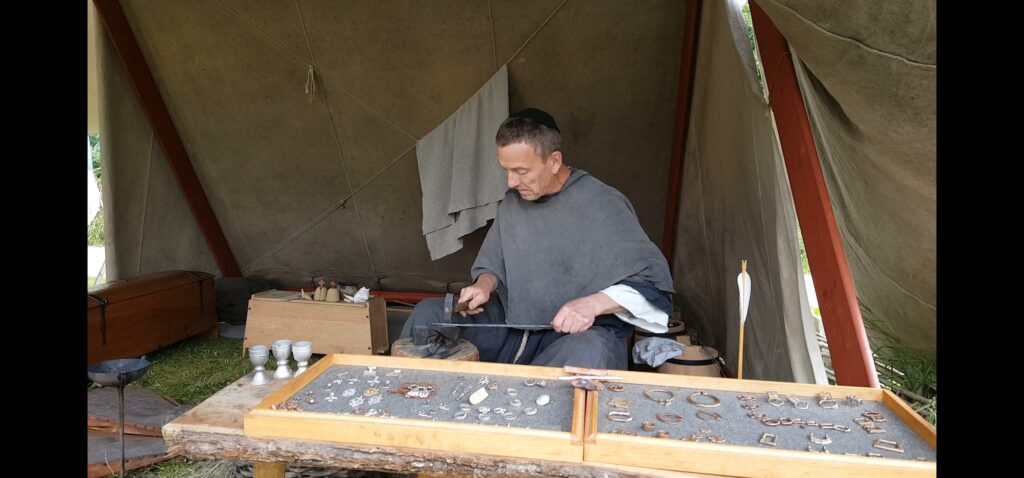
Trivia about Middle Age traditions. Pictures I took from Ribe, Denmark 2017
Den 1. januar 2026 var der 4.217.476 medlemmer af folkekirken. Det er 70,0 procent af de i alt 6.025.603 indbyggere i Danmark. As of the January 2026, there are 4,217,476 members of the The National Chruch of Denmark. It is around 70% of the total population out of 6,025,603. – Folkekirken members
In Denmark, Viking and the Middle Age is celebrated in many places during the summer time. People dressed in traditional clothes, build tree houses and tents, making jewelry and weapons for hunting and practical use, role playing, dancing and singing. It is a tradition that some locals prepare for.
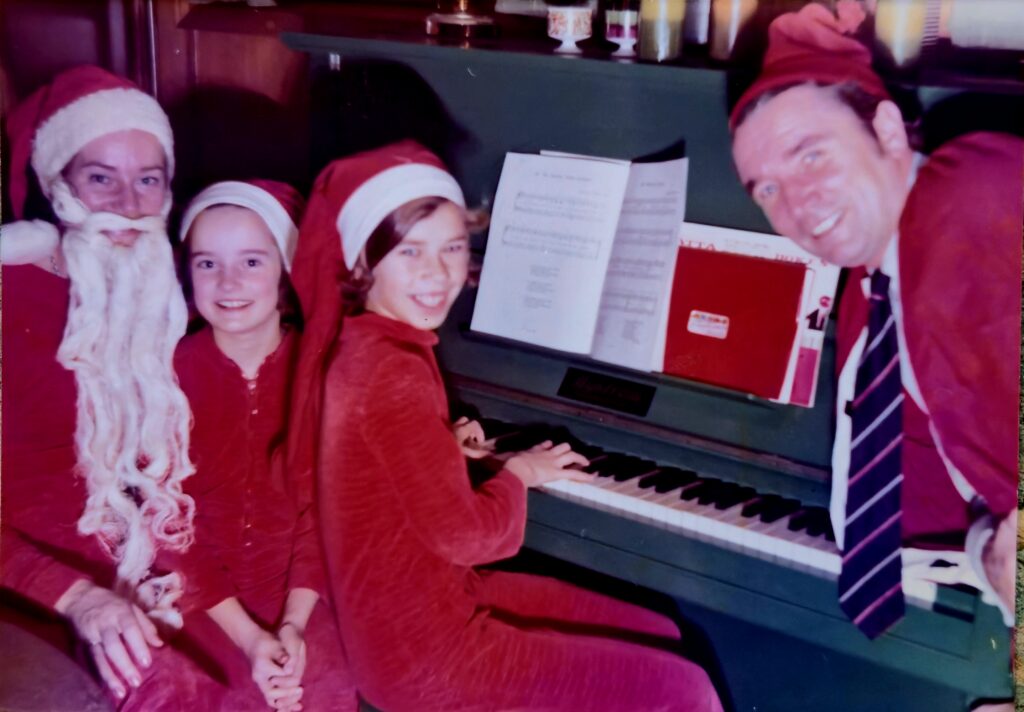
“My father encouraged me to engaged either into music or art. I was very close to my father, and I remember him asking me, as to what I would like to do with my life (lol).” -Maria Franzén
During her younger years, she travelled the world, met new people, experienced other cultures, made new friends, which became her inspiration in making unique art using different techniques that mirrors her artworks.
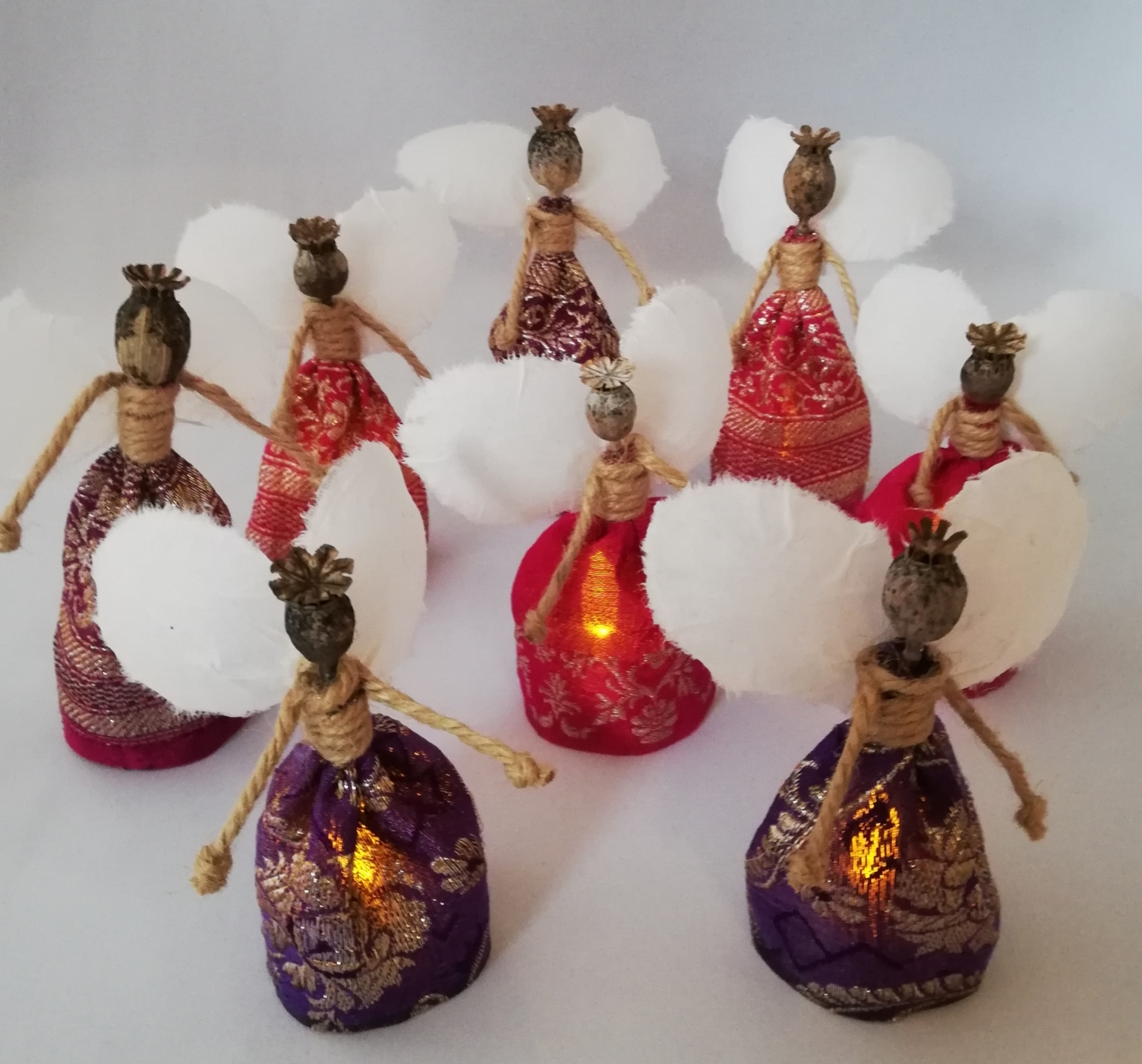
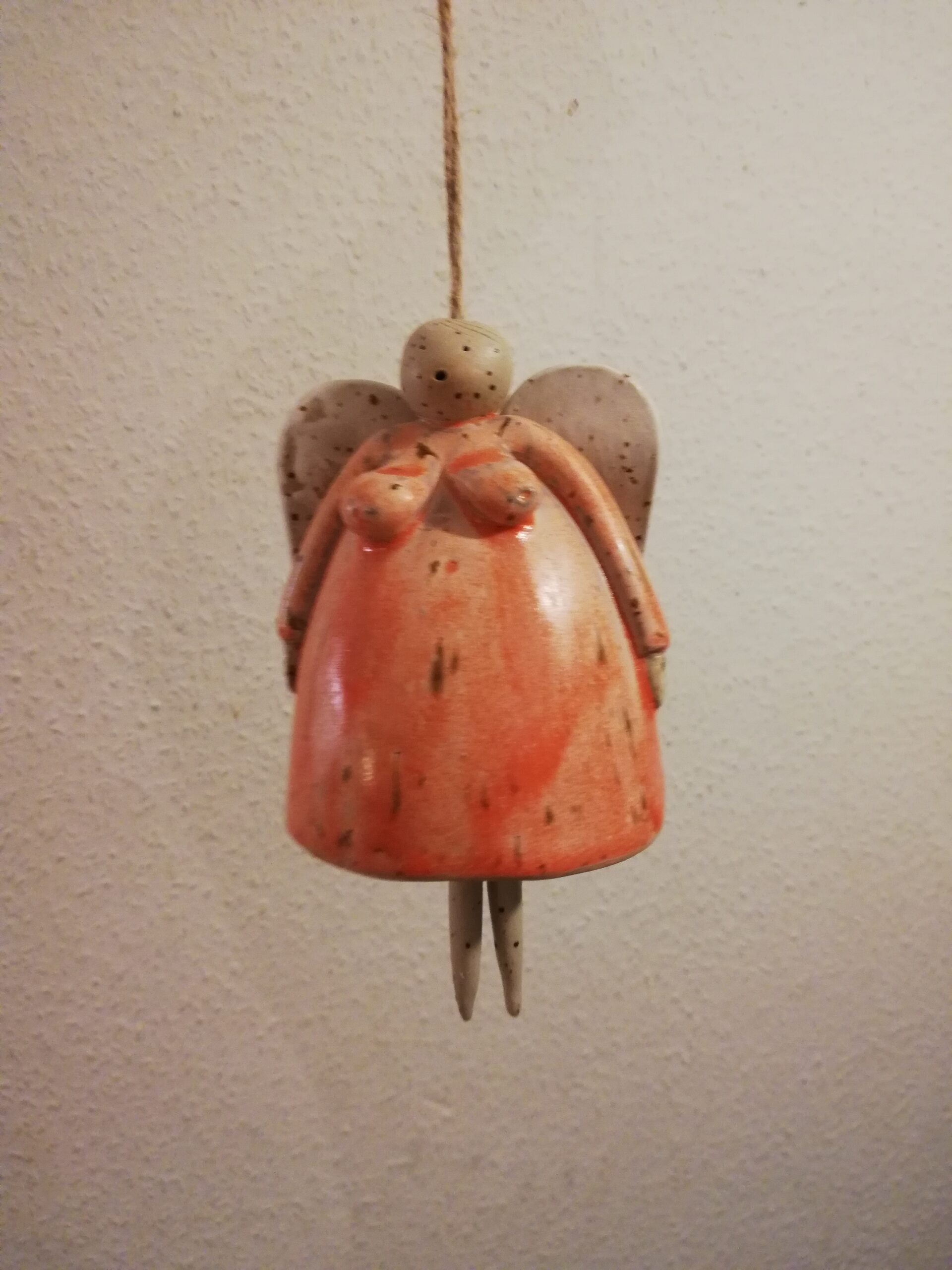
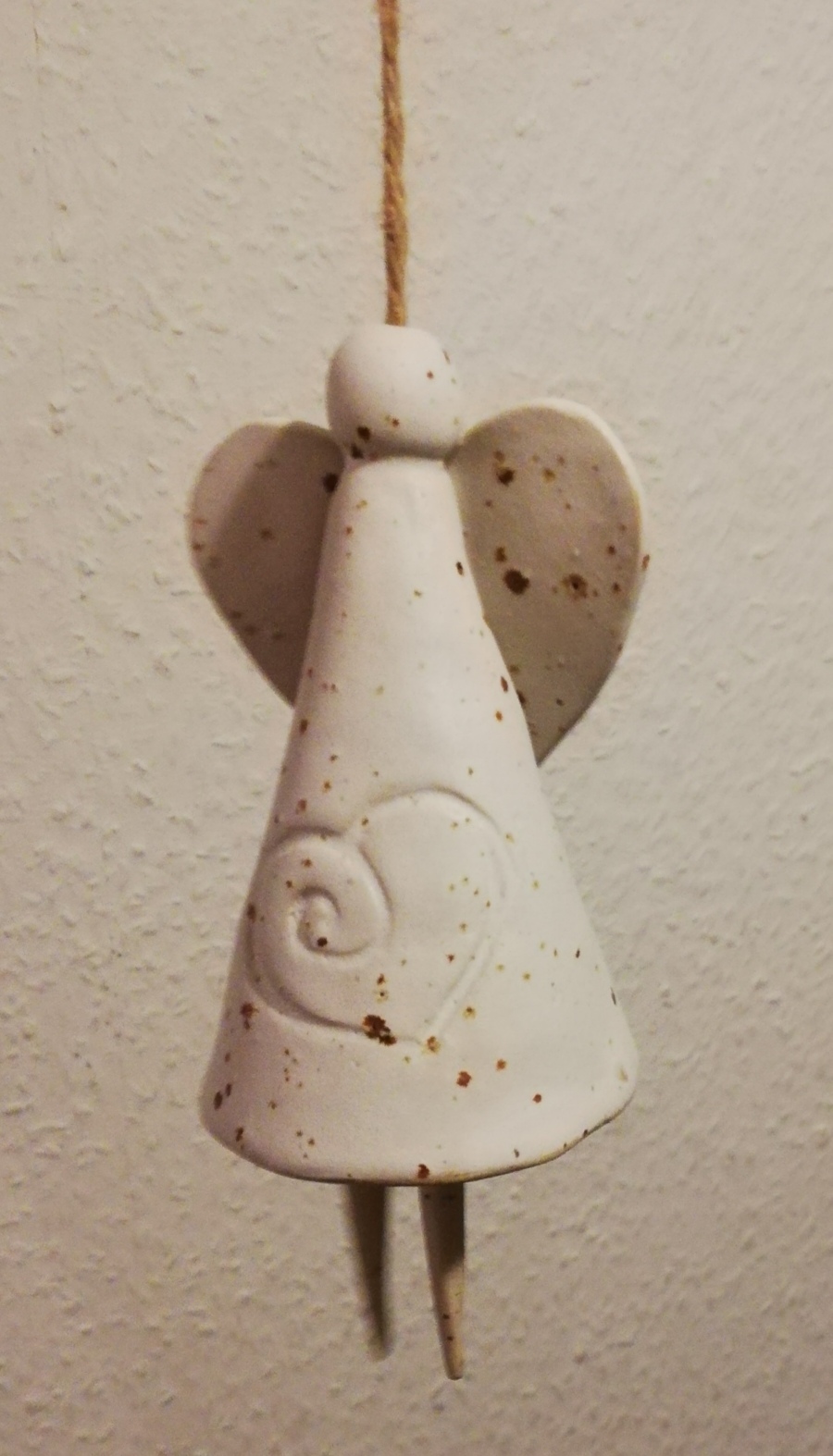
Ceramic figures are small sculptures or decorative objects made from clay that has been shaped and then hardened by firing in a kiln (a very hot oven used for pottery). -Wikipedia and AI
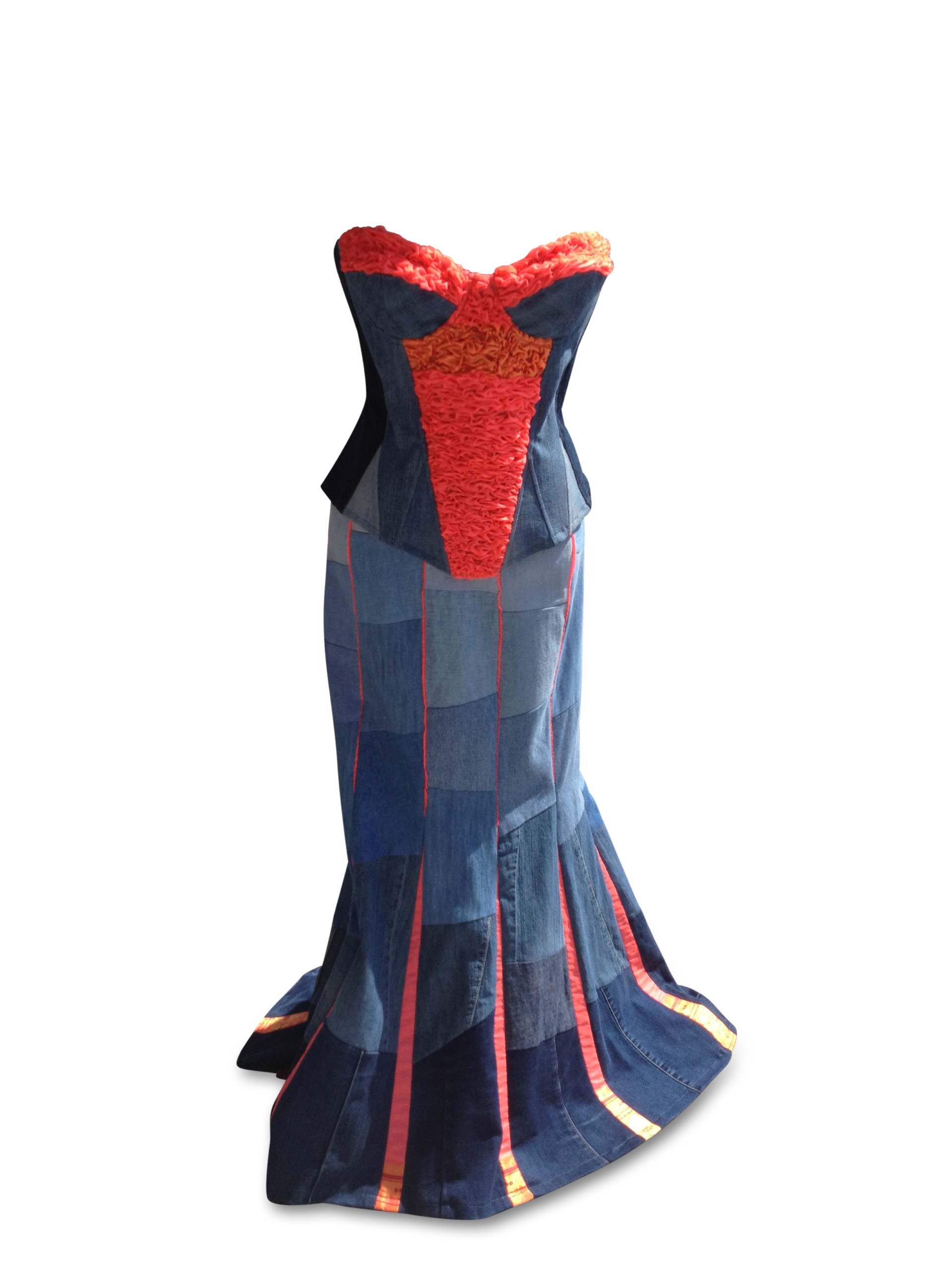
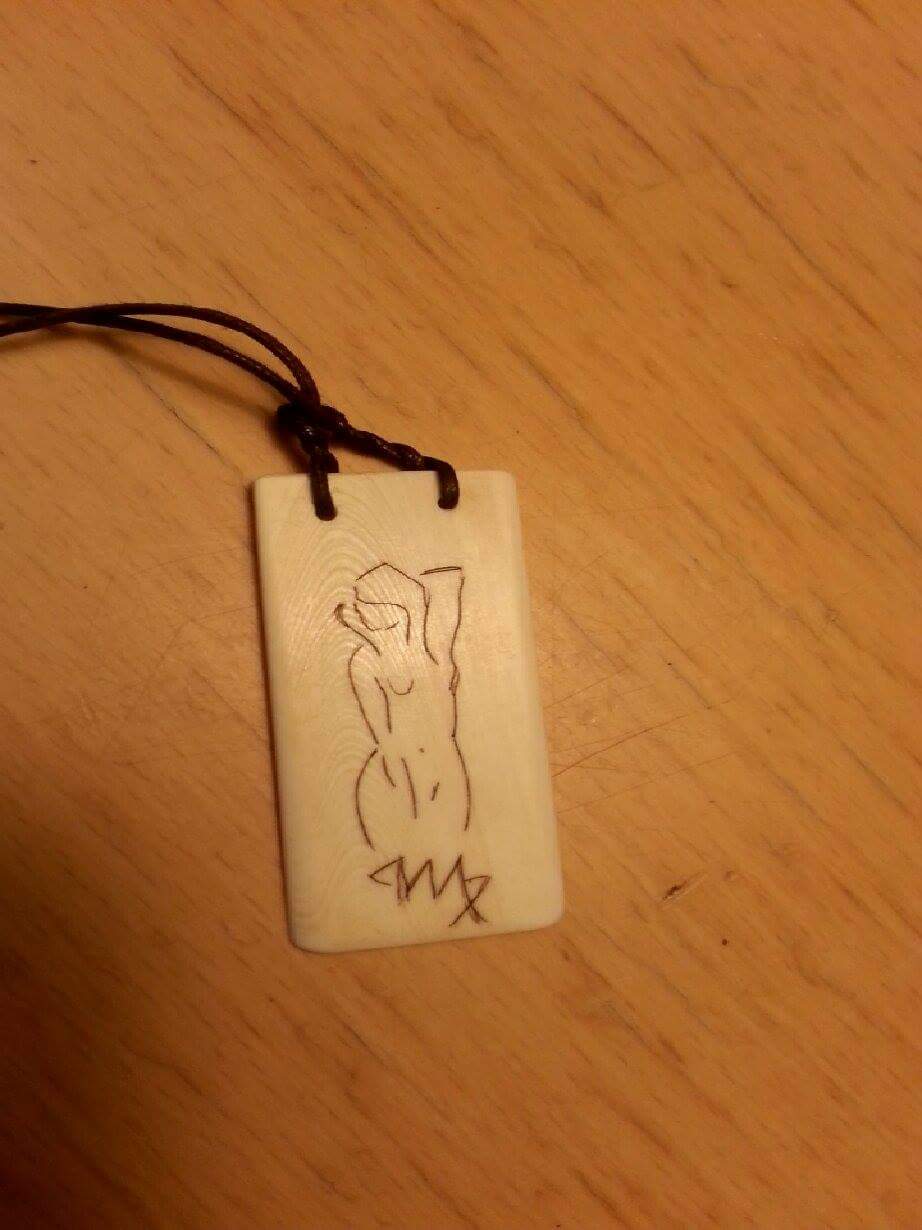
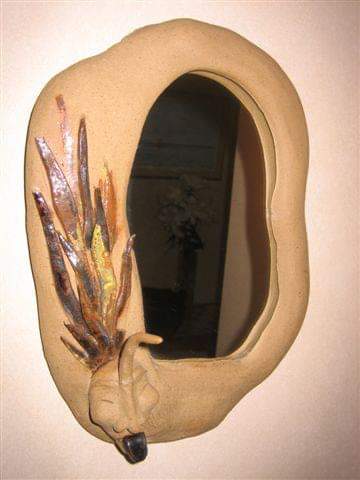
Here are some of Maria’s creative works: a dress crafted from recycled denim, a pendant made from ivory sourced from a rare, numbered piano key no longer used in modern pianos, and an elegantly designed ceramic mirror showcasing fine craftsmanship.
Maria’s creative personality, which led her to arts and music, was evident in the mid-eighties when she took a ceramic course at The Alfred C. Glassell School of Art in Houston, Texas.
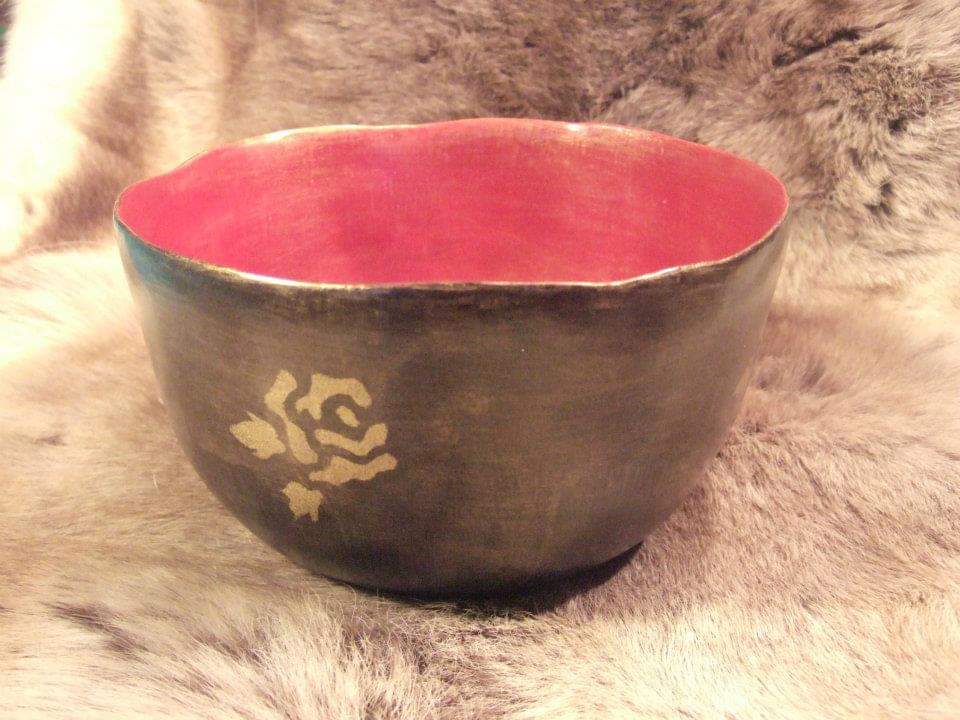
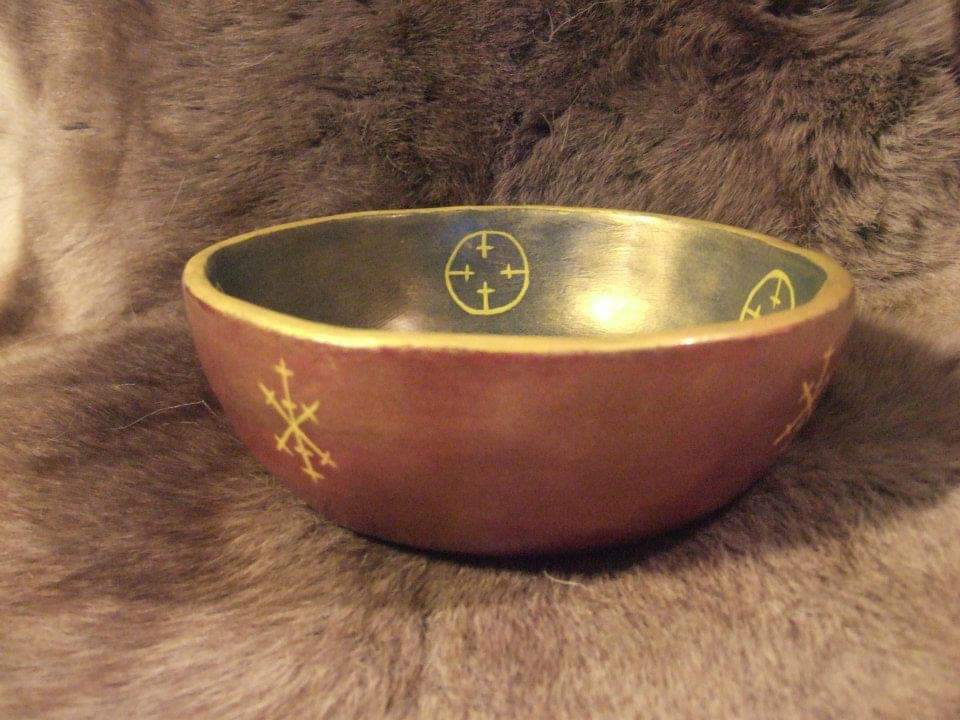
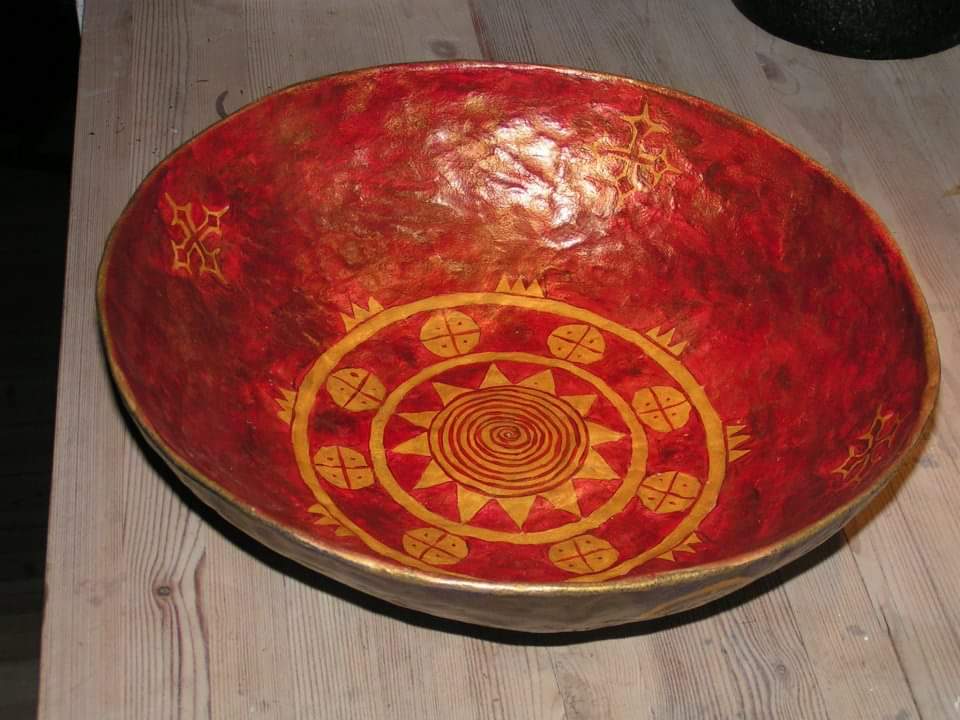
Paper mache (or papier-mâché) is a versatile crafting technique that involves layering paper strips or pulp with an adhesive paste to create lightweight, sturdy objects. Originating in ancient China, this method has evolved from creating ceremonial masks to becoming a popular medium for art, school projects, and even historical furniture and boats. -Wikipedia
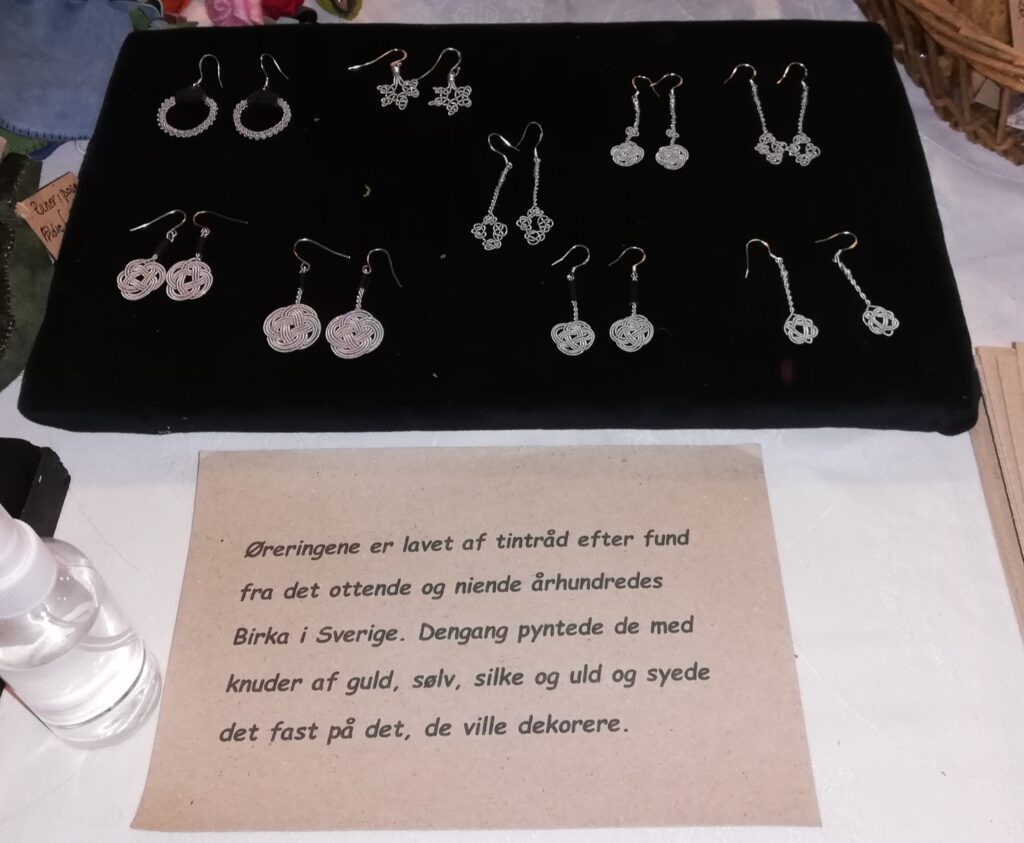
The earrings are made of wired tin thread inspired by knots from the 8th and 9th-hundred Birka in Sweden.

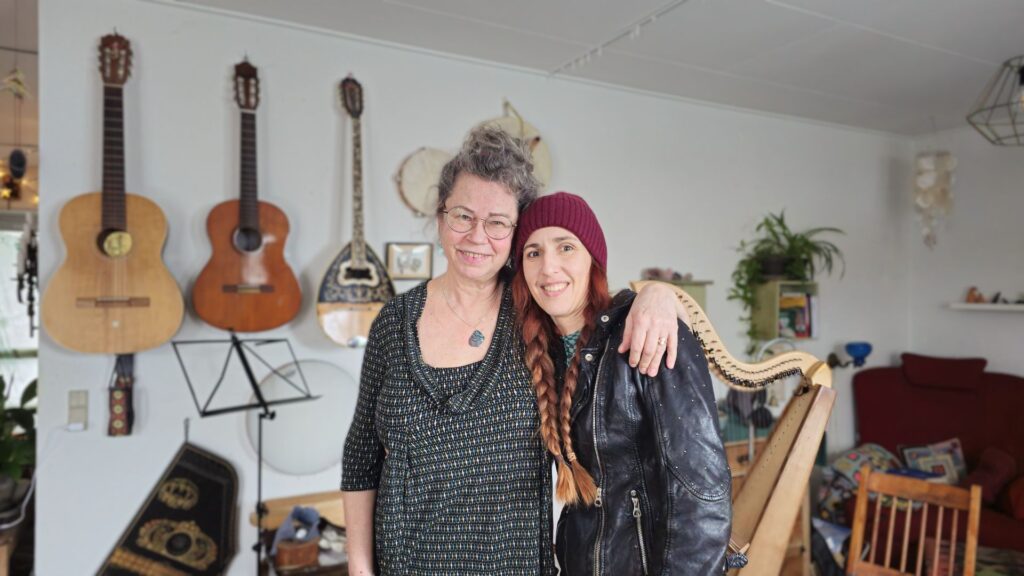
On the 7th of February, we interviewed Maria Elisabeth Franzen in her home in Jystrup. A wonderful lady!
I met the artist Maria through Roksana, who lives a couple of blocks away from her.
We were accommodated warmly by Maria’s stories, songs, and homemade breads and dessert!
Click here to read about Medieval Songs & Traditions in the Nordic Countries
Medieval Songs and Traditions in the Nordic Countries
The medieval period in the Nordic countries—encompassing Denmark, Norway, Sweden, Iceland, and Finland—was a rich crucible for unique cultural expressions, many of which survive today. Central to this heritage are the songs, dances, and traditions that seamlessly weave together the lives of the people with the stunning, often harsh, natural environment. These practices were not merely entertainment; they were vital community rituals that celebrated history, upheld cultural identity, and revered the natural world itself.
The Role of Nature in Lyrics and Lore
Nature is an inescapable and defining element in Nordic medieval culture, and its influence is profoundly felt in the lyrical content of the songs, particularly the ballads (folkeviser/kæmpeviser). Unlike the courtly love themes prevalent in much of Continental Europe, Nordic ballads frequently feature settings, metaphors, and events tied directly to the landscape.